


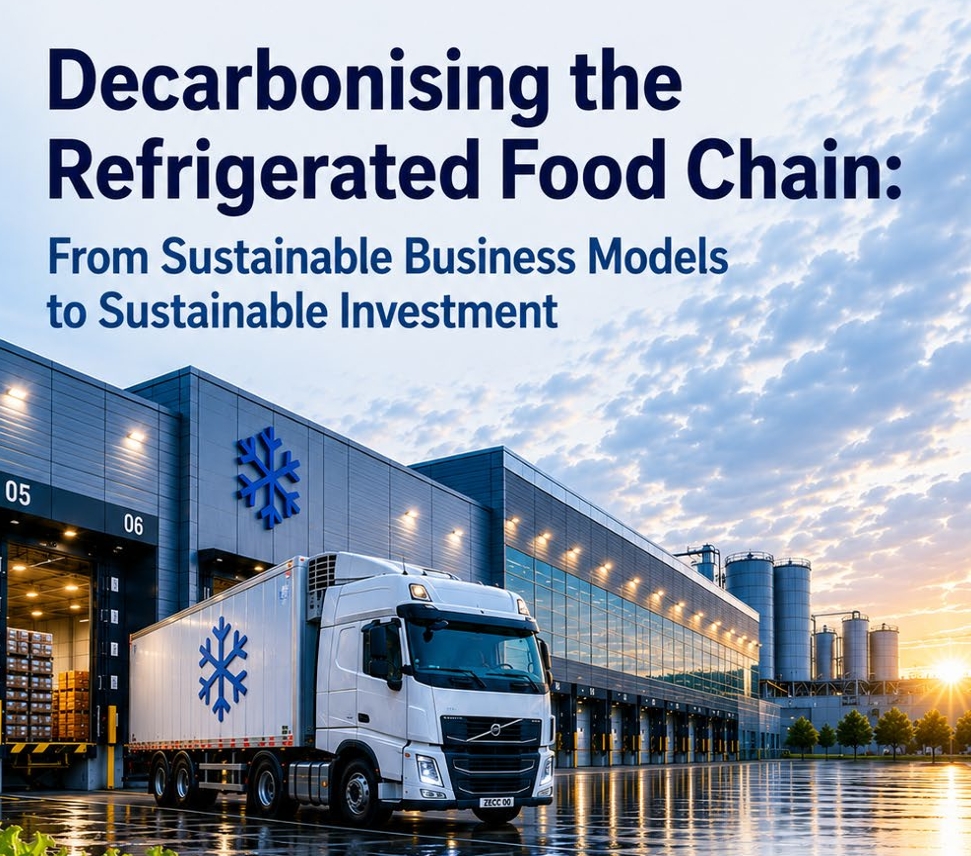
The study was led by Professor Bing Xu of Heriot-Watt University and developed with partners including the Scottish Wholesale Association and the Scotland Food & Drink Partnership’s Net Zero Programme.
The report finds that while funding opportunities exist, many SMEs struggle to access the right support, identify suitable finance options and make decarbonisation projects commercially viable. It argues that a more coordinated approach is needed, bringing together government, financial institutions, industry bodies and businesses to accelerate investment in the food cold chain.
The food cold chain plays a vital role in keeping produce fresh from farm to fridge and supplying communities, hospitality businesses and public services across Scotland.
Professor Bing Xu, Director of the Centre for Financing a Sustainable Future at Heriot-Watt University, said the challenge is not simply a lack of finance, but a mismatch between available funding and the investment needs of SMEs. She called for more accessible finance alongside practical business support and industry collaboration to help businesses reduce emissions, lower energy costs and strengthen competitiveness.
Ylva Haglund, Head of Sustainability & Communications at the Scottish Wholesale Association, co-author of the report, said:
“The findings from the Heriot-Watt research really chime with what we've been hearing from our members. Wholesalers want to invest in decarbonisation, but upfront costs and wider commercial pressures remain significant barriers.”
“We need practical financial support, greater recognition of wholesale in investment programmes, and a policy environment that gives businesses the confidence to invest in a more efficient and resilient food supply chain.”
The report highlights that most cold chain emissions come not from refrigerant gas leaks, as is often assumed, but from the energy needed to run compressors, chillers and freezers around the clock.
Most of the firms studied invested in low-carbon refrigeration only when it also brought another benefit, such as lower costs, reduced risk, compliance or meeting customer demands.
The Scottish Wholesale Association contributed to the research as part of its ongoing work to support wholesalers and food and drink businesses on the journey to Net Zero 2040. The findings will help inform future efforts to improve access to finance and accelerate decarbonisation across Scotland’s food and drink supply chain.


